
CRISIS UPDATE
Afgan Sadigov: Georgia Must Account for the Forced Return of Journalist Afgan Sadigov to Azerbaijan
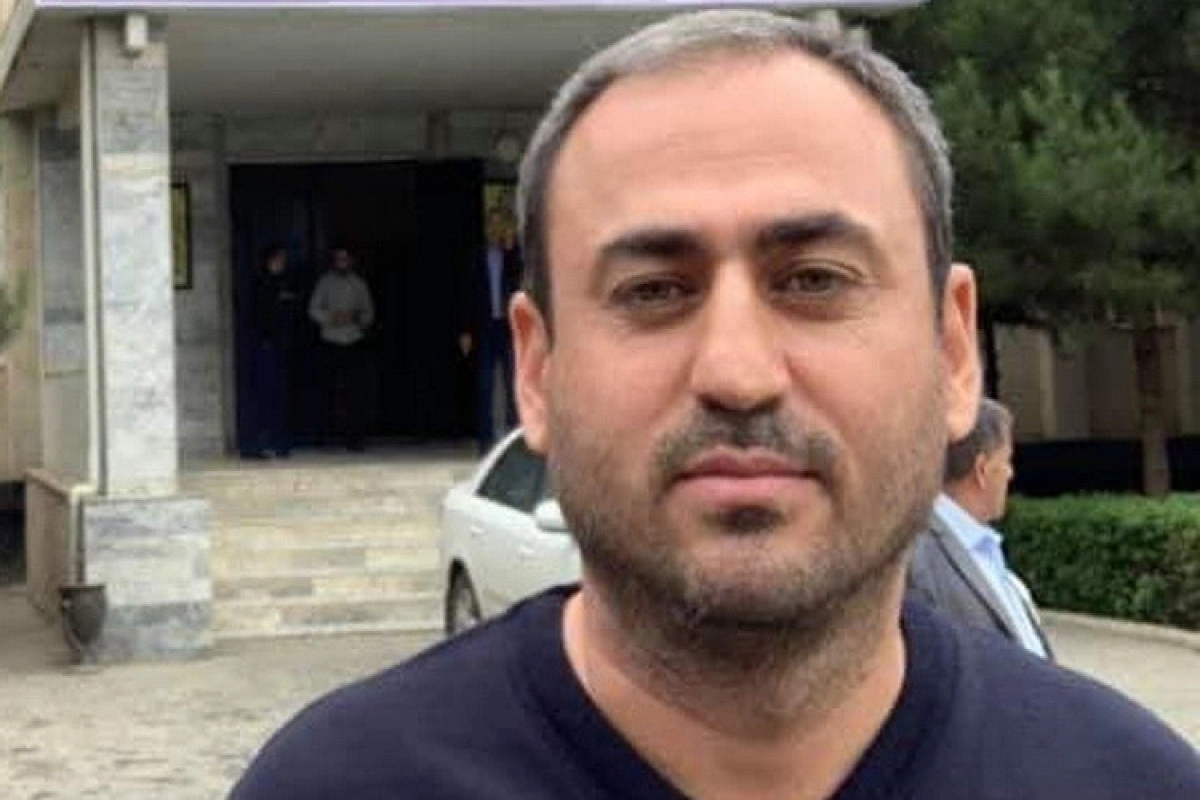
Afgan Sadigov’s late-night arrest yesterday, Saturday 4 April 2026, subsequent expulsion, and arrival in Baku today bear the hallmarks of transnational repression and raise serious questions of extraordinary rendition.
The Campaign to End Repression in Azerbaijan condemns the late-night arrest of Azerbaijani journalist Afgan Sadigov in Tbilisi, Georgia, and his forcible expulsion to Azerbaijan in violation of international human rights norms. Sadigov has since been deported and arrived in Baku today, 5 April 2026. Given his documented history of persecution in Azerbaijan, his return raises serious concerns that he may face arbitrary detention and ill-treatment.
The Georgian authorities must provide a full public account of the circumstances in which he was arrested, expelled, and removed to Azerbaijan — including any prior coordination with Azerbaijani prosecutorial or diplomatic authorities — and explain how his removal was compatible with Georgia’s binding international human rights obligations, including the interim measures issued by the European Court of Human Rights issued by the Court to prevent his extradition.
The Campaign further calls on the Azerbaijani authorities to ensure Sadigov’s immediate access to legal counsel and his family, and to refrain from subjecting him to arbitrary detention, ill-treatment, or any form of politically motivated prosecution.
About Afgan Sadigov
Afgan Sadigov is the founder and editor of the regional news site Azel.tv. He has reported extensively on social and political issues and has been openly critical of the Azerbaijani authorities. Since 2016, he has reportedly faced persecution in connection with his professional activities. State-led reprisals have included multiple administrative penalties and criminal charges, including for hooliganism, slander, and extortion. Following his conviction on extortion charges in 2020, Sadigov was pardoned and released from prison in May 2022.
Chronology of Events in Georgia
In 2023, Sadigov and his family relocated to Georgia, after which Azerbaijani authorities brought new charges against him — again related to alleged threats and extortion — and requested his extradition from Georgia. In July 2024, Georgian border authorities prevented him from travelling to Turkey without providing any explanation, and imposed a restriction prohibiting him from leaving for any country other than Azerbaijan. On 3 August 2024, he was placed under extradition detention by Georgian prosecution. In protest, Sadigov began a hunger strike.
On 14 January 2025, following a petition by the Social Justice Center, the European Court of Human Rights issued an interim measure prohibiting Georgia from extraditing Afgan Sadigov to Azerbaijan. On 16 April 2025, he was released from detention on bail. He subsequently sought permission to leave Georgia for a third country; however, according to his lawyers, the travel restrictions imposed as part of his bail conditions prevented him from doing so.
During 2025, Sadigov was fined multiple times for his participation in protests in Georgia and sentenced to administrative arrest on two occasions.
The Expulsion
On the night of 4 April 2026, Sadigov was reportedly arrested and brought before the Tbilisi City Court. In the early morning of 5 April 2026, at approximately 04:00, the court found him guilty of an administrative offence under Article 173 of the Code of Administrative Offences, reportedly for insulting a police officer on social media. In addition to imposing a fine of 2,000 GEL, the court ordered his expulsion from Georgia to Azerbaijan and imposed a three-year ban on re-entry. This decision follows amendments introduced in June 2025 to the Administrative Offences Code in the context of regulating peaceful protests in Georgia.
In their official statement, to justify Sadigov’s expulsion, the Ministry of Internal Affairs stated that a few days prior, the Azerbaijani Prosecutor’s Office had terminated the criminal case underlying the extradition request, that extradition proceedings in Georgia were therefore discontinued, and that Sadigov’s expulsion was carried out solely as a lawful consequence of an administrative offence, in accordance with domestic legislation and the rule of law.
A Case of Transnational Repression and Possible Extraordinary Rendition
However, the circumstances of this case raise serious concerns as to whether the expulsion was used as a substitute mechanism to achieve the same result as extradition, despite the binding interim measures issued by the European Court of Human Rights. Viewed in light of Sadigov’s prior persecution in Azerbaijan, the renewed charges brought against him there, the restrictions imposed on his ability to leave Georgia for a third country, and the timing and manner of his late-night arrest and removal, the case exhibits clear indicators of transnational repression. Furthermore, the use of administrative proceedings to effectuate his removal to Azerbaijan — where he faces a real risk of renewed politically motivated prosecution — raises serious concerns of an unlawful transfer amounting, in substance, to extraordinary rendition, irrespective of its formal legal classification. International human rights law prohibits refoulement in all forms of removal, including expulsion, and cannot be evaded through procedural recharacterisation.
Additional information provided by Sadigov’s wife, Sevinc Sadigova, further suggests that the detention and deportation may have been pre-planned. According to her account, a meeting between Georgian and Azerbaijani prosecutorial authorities took place on 1 April 2026, after which steps were allegedly initiated to secure his transfer. She also indicated that Sadigov’s passport had been deactivated through prior communication from the Azerbaijani embassy, effectively preventing him from travelling to a third country. The timing of the court decision — issued in the middle of the night — and the alleged lack of prior notification to his lawyers regarding the deportation procedure raise additional due process concerns.
In light of these elements, the Campaign reiterates its long-standing concerns regarding the transnational repression of Azerbaijani dissent. The arrest and expulsion of Afgan Sadigov, under these circumstances, raise serious questions as to Georgia’s compliance with its international human rights obligations and suggest a pattern of coordinated cross-border measures aimed at silencing dissenting voices.
 EN
EN  AZ
AZ